Showing posts with label G324 Research into Music Videos. Show all posts

Monday, 4 March 2013

The Beat Generation

My analysis of music videos has led me into the idea of lyric or cue cards from looking at the music video for Subterranean Homesick Blues by Bob Dylan. This subsequently caused me to learn about the Beat Generation, which has a strong connection to Bob Dylan and the music video for Subterranean Homesick Blues.

The Beat Generation came into the spotlight post-World War II because of some American writers who met in New York in the 1950s. The central themes of the Beat culture were the rejection of received standards, style innovations, drug experimentation, alternative sexualities, an interest in Eastern religion, a rejection of materialism, and explicit portrayals of the human condition.


The best known pieces of literature to come out of the Beat Generation are Howl by Allen Ginsberg (1956), Naked Lunch by William S. Burroughs (1959), and On the Road by Jack Kerouac (1957). Howl and Naked Lunch ended up as the focus of the obscenity trials that helped liberalise publishing in the United States.


The video below shows Ginsberg reading Howl, his infamous piece of Beat Generation literature:


The authors of these pieces of literature were part of the central group that caused the Beat Generation. These people developed a reputation as bohemian hedonists who celebrate non-conformity and spontaneous creativity.

The Source

The Source is a documentary on the Beat Generation shown in 1999. This documentary looked closely at the Beat Generation from beginning to end, and, despite members of the Beat Generation being deceased, analyses the era in great detail. The first part of the documentary (the length of the documentary means that it had to be split into 7 separate YouTube videos) is shown below. To see the next six parts, proceed to the YouTube channel that uploaded it or click on the correct related videos.


The Beat Generation's Effect on Rock and Pop Music

The Beat Generation had a large effect on rock and roll and popular music outside of the music video for Subterranean Homesick Blues. For example, the Beatles were influenced by the Beat Generation; the "a" in "Beatles" was partially inspired by the Beat Generation. Also, John Lennon was a fan of Jack Kerouac, who was one of the main Beat Generation writers. Another one of these central figures to the Beat Generation, Allen Ginsberg, later met and became friends with the Beatles. One member of the Beatles, Paul McCartney, has another link to Allen Ginsberg, as he played the guitar for Ginsberg's album Ballad of the Skeletons.


Video of Ballad of the Skeletons, with William S. Burroughs reading, music by Philip Glass and Paul McCartney playing the guitar


The performance of A Ballad of American Skeletons - read by Allen Ginsberg and with Paul McCartney playing the guitar - at The Royal Albert Hall in 1993. The evening of poetry and performance was promoted by Goldmark and entitled The Return of the Reforgotten.


Ginsberg had several friends in rock and pop music. One of these was, as I have mentioned in previous posts, Bob Dylan. Other than Subterranean Homesick Blues, another link between the two is that Ginsberg toured with Dylan on the Rolling Thunder Revue in 1975. Ginsberg and Dylan were also both Jewish. Going back to the music video for Subterranean Homesick Blues, as Ginsberg is dressed as a Rabbi when he makes an appearance in the music video, this could be seen as Bob Dylan awarding Allen Ginsberg status. This is because Rabbi are seen as symbols of power, authority and status among Jews.

Ginsberg was also friends with Ken Kesey's Merry Pranksters (this group promoted the use of psychedelic drugs and their motto was "Never Trust a Prankster", which has an obvious link to the group's name). Neal Cassady was part of this group, along with other members which included members of the American rock band Grateful Dead.

Another central figure in the Beat Generation, William S. Burroughs, was friends with Mick Jagger, Lou Reed and Patti Smith. Also, Burroughs' novel The Soft Machine was the inspiration for the name of the British progressive rock band Soft Machine. The musical group Steely Dan is another group that named itself after something from Burroughs' work - in this case, the steam-powered dildo in Burroughs' infamous Naked Lunch. Yet another piece of work that was motivated by Burroughs' work is the track Naked Lunch by the Japanese free jazz band Tipographica. This track was made to celebrate Burroughs' piece of literary work that has the same name. The singer-songwriter Tom Waits also collaborated with Burroughs' on the theatrical work The Black Rider.

The late William S. Burroughs

Before Tom Waits collaborated with Burroughs, though, he had links to the Beat Generation. Tom Waits was a Beat [Generation] fan (fans of the Beat Generation were known as Beatniks), and wrote the song Jack and Neal about Jack Kerouac and Neal Cassady (aforementioned major parts of the Beat Generation). Tom Waits also recorded the track On the Road with Primus. This was written by Jack Kerouac after finishing the novel.

Furthermore, a song named Kerouac was created to make a tribute to Jack Kerouac as well as his personal philosophy and way of life. This song was written by low rock musician Mark Sandman. Sandman was the former member of the alternative jazz rock band Morphine, where he was the bass guitarist and lead vocalist. He was widely open to the Beat Generation, which led to his creation of the song Kerouac.

The Resurgence of Interest in the Beats

File:Mister Heartbreak - Laurie Anderson.jpg
Laurie Anderson's album Mister Heartbreak
features Burroughs
In the 1980s, there was a resurgence in interest in the Beats among bands. Allen Ginsberg worked with Clash, and Burroughs worked with Sonic Youth, R.E.M., Kurt Cobain, and Ministry (to name a few). Laurie Anderson featured Burroughs on her 1984 album Mister Heartbreak - Burroughs read the lyrics of the closing track, Sharkey's Night - and in her 1986 concert film Home of the Brave. As well as this, King Crimson produced the album Beat. This album was inspired by the Beat Generation.

Burroughs was named by Bono from the group U2 as a major influence, and Burroughs also made an appearance in U2's music video Last Night on Earth in 1997. This was Burroughs' last filmed performance, as he died mere weeks after.

Wednesday, 27 February 2013

Similarities Between a Similar Artist's Digipaks and My Print Productions

One of the digipaks from similar artists which I examined when researching and planning my print productions was #3 by The Script. I am going to examine the similarities between my print productions is their current state and this digipak from a similar artist (a boy band, with songs that fit into the pop genre).


Both my digipak and the digipak for #3 by The Script use black and white images to make the digipak stand out from the standard pop genre digipak, while still conforming to pop genre conventions that enable it to be identified as pop music. The focus on the band and their image is perhaps the most significant pop genre convention used, as the artist and their image is a massive part of how popular, loved, and successful an artist becomes.

The front panel of my digipak

The front panel of the digipak for #3 by The Script

Every part of my print productions uses the main performer - the boy - as the main focus as he is the human symbol associated with the brand. Similarly, the digipak uses the artist as the main focus by blending the three members of the boy band, The Script, into a human shape that is the sole focus - excluding the logos or the artist and album name - of the front panel of the digipak.

The artistic look of both digipaks is also a way in which they are related. The paintbrush-like effect I have used on the image, and its integration with the graffiti in the background, emphasises the unique nature of it. The front panel of the digipak for #3 by The Script uses the way it integrates the images of the three band members together as its way of attracting its target audience - teenagers, mainly female, who will likely enjoy some forms of art - using creativity. The coat of the band member on the far right (Mark Sheehan) is faded into that of the largest - and most famous - band member (Danny O'Donoghue) to create an interesting effect that resembles scales on O'Donoghue's neck.

So, both of these digipaks use creative techniques, such as black and white and other artistic effects, such as the way text and image integrate together, to make them stand out from the competition in their genre while still conforming to genre conventions, such as the focus on the artist, to make them immediately identifiable with the pop genre.


How the Music Video for Hall of Fame Featuring will.i.am Relates
to the Respective Digipak

The image shown below is the front panel of the digipak for the single Hall of Fame featuring will.i.am. This song is part of the album #3, mentioned above.

Once again, you can see the stylish, creative design. The aspect I would like to focus on is how this digipak is connected to the respective music video, shown underneath the image of the front panel of the digipak.

Both of these products focus heavily on the artist, with the artist being the primary focus of the front panel of the digipak and there being many performance shots of the band members (including will.i.am). This shows both of the products conforming to the pop genre conventions I mentioned previously in this post. The pop genre conventions shared by all of these products link them together and allow them to work more effectively as a whole.


Both products also emphasise the message of being dedicated to your aspirations in life - the confetti-like effect on the front panel of the digipak is a strong link to the confetti shown for the ballerina who has achieved her dream at the end of the music video. The band members (including will.i.am) are always shown in a strong, positive way too. For example, when they sing in the performance shots, they are regularly shown in close-up shots, and the focus of the front panel of the digipak is Danny O'Donoghue's face. The fact that O'Donoghue is the most famous member of The Script, partly due to his role as a judge on the TV show the Voice UK, is not a coincidence - by focusing on the most recognisable member of the band, they emphasise the generic pop convention of focusing on the artist, who is often the biggest part of marketing the product(s). Once again, using the same techniques in more than one product concerning the track itself - in this case, the music video and the digipak - emphasises these techniques and makes them work more effectively. This is a technique used for my own range of products concerning my chosen track, Tonight I Let You Go by The Colours.

Sunday, 13 January 2013

Subterranean Homesick Blues and its References to the Beat Generation and 1960s Politics and Culture

Subterranean Homesick Blues, by Bob Dylan, is a music video that started out as an opening clip to D. A. Pennebaker's documentary on Bob Dylan's 1965 tour of England, named Dont Look Back. In this film, Bob Dylan holds up lyric cards containing a certain word or phrase form the line of the song that accompanies the action.

The lyric, or cue, cards themselves were written by Bob Dylan, Donovan, Bob Neuwirth, and Allen Ginsberg - intentional misspellings and puns were inserted into the clip, such as "20 dollar bills" being shown on a lyric card when the lyrics played in the background say "eleven dollar bills". The clip was shot in London, in an alley behind the Savoy Hotel. Both Bob Neuwirth and Allen Ginsberg make cameos in the clip; you can see Neuwirth and Ginsberg in the background.


Three screenshots from the
documentary Dont Look Back

The lyrics of the song are heavily influenced by 1960's culture. The first line(s) of the song,

"Johnny's in the basement mixing up the medicine
I'm on the pavement thinkin' about the Government"

is/are a reference to the codeine distillation and politics of that period, with the first part of the above lyrics connoting codeine distillation and the second part connoting the politics of the time (e.g. the impact created by Martin Luther King and the assassination of J. F. Kennedy).

The lyrics of Subterranean Homesick Blues were packed full of up-to-date references to important emerging elements of 1960s youth culture. Rock journalist Andy Gill said: "an entire generation recognised the zeitgeist in the verbal whirlwind of 'Subterranean Homesick Blues'."

In addition, the lyrics

"Better stay away from those
That carry around a fire hose"

reference the struggles surrounding the American civil rights movement at the time, as during the civil rights movement, peaceful protesters were beaten and sprayed with high pressure fire hoses. Despite all of these controversial political references, the track managed to become Bob Dylan's first USA Top 40 hit.


The Beat Generation

Subterranean Homesick Blues has many links and origins within the Beat Generation that preceded it - for starters, its name was possibly inspired by Jack Kerouac's novel The Subterraneans, published in 1958 (this novel was actually about the Beats).

Allen Ginsberg, at the Miami Book
Fair International of 1985

Bob Dylan fell into part of the group of American post-World War II writers that led the Beat Generation - Jack Kerouac, Lawrence Ferlinghetti, Gregory Corso, and Allen Ginsberg - when he met them at the University of Minnesota in New York in 1959. From here the Beat scene influenced Dylan; this is at least part of the reason why Ginsberg makes a cameo in the music video for Subterranean Homesick Blues. Another reason why is that Dylan and Ginsberg were close friends - Ginsberg toured with Dylan on the Rolling Thunder Revue tour in 1975. As aforementioned, Bob Dylan, Donovan, Bob Neuwirth, and Allen Ginsberg were the writers of the lyric/cue cards - this is related to the facts that they were friends and Allen Ginsberg and Bob Neuwirth make cameos in the music video. Bob Dylan names Allen Ginsberg and Jack Kerouac as major influences on his work. I will go into more detail on the Beat Generation itself in another, upcoming post.

Tuesday, 11 December 2012

How the Music Video for Nothing Compares 2U Influenced My Music Video

The music video for Nothing Compares 2U by Sinéad O'Connor contains several shots and methods of editing that have directly influenced our music video. I will break everything down into these two sections.

The Shoot
      
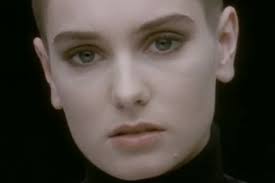
Close-up shot of Sinéad O'Connor
 
Close-up shot of the main male
performer of my music video

The music video for Nothing Compares 2U focuses heavily on the artist, strongly marketing her without treating her in a voyeuristic way. This helped to improve our music video as in our first few shooting sessions, we recorded far too many medium shots. This music video is an example of why close up shots of the artist(s) and/or any other important people are essential - unlike medium shots, close up shots help you to engage with and relate to the person in question. As the artist is usually the major selling point of the music video, close up shots of them are very important. The images shown above are examples of close-up shots being used like this in the music videos for Nothing Compares 2U and Tonight I Let You Go (my music video).

In addition to my other research on montage, the montage used in the music video for Nothing Compares 2U is highly effective and the cross fades that are used so well in that montage are also used for the montage in my edit (read The Edit, below).

Also, the shots of symbolic statues and constructions used in the music video for Nothing Compares 2U have had an effect on our music video. We use similar shots but add a modern twist, with our versions of these shots containing graffiti in urban areas and shots of traffic and traffic lights. These things are iconic symbols of contemporary Britain, just like the graveyard in the music video for Nothing Compares 2U shows many traditional statues and figures.

Cultural signifiers - such as statues - are used in the
music video for Nothing Compares 2U

The postbox, texting teenager, roads, cars, traffic lights, and housing
estate are all signifiers of contemporary Britain

The Edit
 
A cross-fade effect used in the montage in the
music video for Nothing Compares 2U

An example of the cross-fade effect that I utilized in
the urban montage near the end of my music video

As aforementioned, the montage in the music video for Nothing Compares 2U influences our music video. In my edit, there is a montage of shots that show the main character, the boy, walking through the city to the girl's house. The focus on subtle yet striking transitions - heavily relying on cross fades - in the music video for Nothing Compares 2U is reflected in my edit of our music video, as I also use many cross fades to make my edit of our music video more interesting and absorbing.

Furthermore, the music video for Nothing Compares 2U matches the action and the lyrics seamlessly to emphasize both and make you feel the emotions that Sinéad O'Connor's character is feeling. I have tried to do this myself, with lyrics such as " I keep on running" being matched with action that contains the main character running (whether it is physically or mentally). In my edit of our music video, I have also matched the sequence containing lyric cards to the part of the track that is (at least partly) written on the lyric cards. This is obvious, but needs to be done well to maximise the effectiveness of the lyric cards.

Sunday, 9 December 2012

Music Video Ratings

This post lists the music videos I have analysed and my personal rating of each of them. I will rate them out of ten on four main points:

Content - this concerns the narrative and/or structure of the music video
Visuals - the way in which the visuals are used to create different effects
Sound - how sound is implemented for various results - this can be matching the action to the lyrics, using other sounds, and more
Longevity - this is how well the music video stand the test of time. Is it long or absorbing enough to begin with, and will you want to watch it several times or come back to it in the future?

This will result in an overall score out of 40.

You will see that most of the music videos I have analysed are (at least partly) from the pop genre. This is due to the fact that pop is the primary genre of the track we have used for our music video, Tonight I Let You Go by The Colours.

List of Scores in order of Score (descending):

Nothing Compares 2U - 35.5/40
Afrika Shox - 32.5/40
What's a Girl to Do? - 29/40
Skyfall - 26/40
Paradise - 23.5/40

Separate Scores:

Afrika Shox:

Content - 9/10
Visuals - 9/10
Sound - 7/10
Longevity - 7.5/10

Total Score: 32.5/40


Skyfall:

Content - 5/10
Visuals - 7.5/10
Sound - 9.5/10
Longevity - 4/10

Total Score: 26/40


Paradise:

Content - 4.5/10
Visuals - 7/10
Sound - 6.5/10
Longevity - 5.5/10

Total Score: 23.5/40


What's a Girl to Do?:

Content - 7.5/10
Visuals - 7.5/10
Sound - 7/10
Longevity - 7/10

Total Score: 29/40


Nothing Compares 2U:

Content - 8.5/10
Visuals - 10/10
Sound - 9/10
Longevity - 8/10

Total Score: 35.5/40

Friday, 7 December 2012

Nothing Compares 2U - Music Video Analysis


Nothing Compare 2U by Sinéad O'Connor is a prime example of how to utilise one of the main attractions of a music video, the artist, without taking away from the track itself or treating the artist in a voyeuristic way (as described in Goodwin's Laws). Originally, the song was written and composed by the artist Prince, as one of his side projects - the band The Family. However, it did not become a worldwide hit until Sinéad O'Connor covered the song and released it as her second single in her second studio album, I Do Not Want What I Haven't Got -though this was not the version that made the song so popular. Sinéad O'Connor later recorded and produced the song alongside the artist Nellee Hooper, and this is the version that caused the success of the track. The music video created for this song (above) is now an iconic music video and was popular on channels such as MTV at the time.

The black costume and background manage to
remove voyeuristic treatment of the artist
and place the focus on her and what she is doing

The music video itself focuses massively on the artist herself - Sinéad O'Connor. This is done by using close up shots of Sinéad O'Connor that cause you to relate to the artist and emphasize with her emotions - and this is important in this music video, as you see her emotions progress drastically through the music video. Normally, when a female artist is focused upon it is in a voyeuristic way that exploits narcissism (the notion of looking). However, in this music video, this does not occur. The completely back background that appears whenever there shot of Sinéad O'Connor singing (which is most of the time) removes any part of the mise-en-scene which would be voyeuristic. Her costume is also completely black and means that the only visible part of her body is her head. This black costume blends into the black background and you are left with what can look like a floating head! The costume is normally the main source of voyeurism, and the way it is implemented here causes you to be completely focused on her face, her expressions, her emotion and her singing.

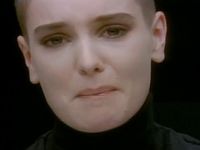
These factors progress as you watch the music video. At the beginning, she is composed and cold-looking, but as you watch the music video she becomes more emotional, to the point where you can visibly see tears rolling down her face at the end. These emotions emphasize the lyrics as well - this song describes the loss of a lover that she cannot bear to be without, as nothing compares to him. An example of this is when she sings about her doctor telling her to get out and have fun, she sings with anger in her voice and on her face.

You visibly see the emotions of
the artist progress through
the music video
At certain points of the song, the music video moves away from this type of shots and uses fading effects to create striking images of old statues and constructions. You occasionally see the artist herself walking through these angelic statues while looking like a black angel herself in her long, dark robe. The black costume makes her stand out and signifies her loss of a loved one - walking through a graveyard by herself emphasizes the feeling of isolation. These images are memorable and well-timed - they ensure that you do not get bored of the long close up shots of Sinéad O'Connor.
Cross fades are used well to
create an effective montage
Furthermore, these shots are used more at one point of the video than any other - around the middle point of the song, a montage is created using close up shots of Sinéad O'Connor's face and shots of the graveyard. This montage is vital in adding some variety to the music video and is subtle enough to fit into the music video without ruining the slow, reflective tone. This is done by using the symbolic statues and some different angle close up shots of the artist. The primary video transition used is a cross fade, and this creates a dynamic transition while keeping to aforementioned tone of the song - if a large, invasive transition was used it would ruin the pacing of the music video completely.

In addition, the genre of this song is alternative pop - it is slower and more meaningful, perhaps, than most pop songs. The more respectful nature of the song also sets it apart from the mainstream nature of traditional pop. The track still retains some aspects of the genre, though, such as a focus on the artist. In the pop genre, the artist is one of the main aspects of the track, the music video and how it is marketed.

Saturday, 24 November 2012

Montage

Montages are used in many different kinds of films - music videos, movies, and television programmes are just a few examples. They are used to express thoughts and ideas in a visual way, and often result in powerful and emotional sequences. Montages such as the one used in the opening of "This is England" are very striking. This particular montage does a brilliant job of creating a unique take on England and the famous moments - positive and negative - that are often associated with it.


The montage theory arose from Lev Kuleshov's work, which contained the a+b=c definition of montage. Lev Kuleshov found that having one image follow another image can produce a thought. His experiments supply us with some examples of this - he found that a picture of a silent, open mouth followed by a picture of a bird flying through the sky would make people think of the mouth singing. Also, when this image of a mouth was followed by a picture of food, people pictured a hungry mouth. The consumer sees the two pictures and combines them to create a result. These experiments were the basis for the development of the montage. A montage triangle can reflect the Kuleshov effect, as it is now usually called. Using the examples that I aforementioned, a montage triangle can be constructed with the image of the mouth at the top, and the images of the food and flying bird below it. This montage triangle results in two equations:

A montage triangle, which
shows the Kuleshov effect
Mouth+Bird=Singing

Mouth+Food=Hungry

A significant part of the art of montage is editing - the timing of the editing is particularly important. Rhythmic and metric editing are used for many reasons, such as to create as much tension as possible in a dramatic scene. Timing the beat of a soundtrack to the action can emphasize the emotions that are felt by the viewer. This would make the film become more interesting and absorbing. 

In addition, I think that seeing a montage where the beat of the soundtrack and the action are timed well is something people enjoy seeing. This makes the consumer want to watch the film more.

Sergei Eisenstein made The Battleship Potemkin (below), which contains an infamous montage. Eisenstein established five types of montage, which are:


Intellectual: Where the shots are put together in a way that creates an intellectual meaning based on the way they combine together.

Rhythmic: This contains cutting the shots together based on continuity, which creates visual continuity between each edit.

Metric: Where images are shown in a way that follows the beat and rhythm of the soundtrack. The focus is on the timing of the editing and what it conveys, rather than the connotations of the shots themselves.

Tonal: The focus is on the meaning of each shot - not how it is edited together. The timing of the editing and the continuity of the shots is less important.

Overtonal: A combination of rhythmic, metric, and tonal montage. The combination of these three different methods is used to construct more complicated and intricate forms of montage.

He said: "The idea of film-making as construction and montage as the putting together of parts of a machine (a machine for signifying, rather as Le Corbusier conceived of houses as machines for living in) had a strong appeal in modernist circles in the early years of the Russian Revolution."

Eisenstein is saying that montage is similar to combining many different parts of a machine to create a whole that conveys a certain meaning or emotion. Montages control what the viewer's response will be; they are used to make the viewer feel a certain emotion or picture something. 

In our music video, we may use montages at some points to create different effects - we may even combine a montage with other effects, such as lyric cards. A music video is, itself, a form of montage - a major part of music videos is conveying meaning through images and artistic editing.

Monday, 12 November 2012

The Mood Board for Our Music Video

One of the first things we did in the process of planning our music video was to construct a mood board that would supply us with inspiration for the following subjects:

General Information about The Colours
The Band
The Costume
The Similar Bands
The Genre
The Lyrics

This mood board was a vital part of our planning process - if we ever needed inspiration, we could look at it and we would come up with great ideas quickly.

The Mood Board


The Making of the Mood Board


Wednesday, 31 October 2012

The History of Lyric Cards in Music Videos

In our music video, we plan to use lyric cards - I have written about this in detail in another post. The inspiration for this idea has come through several music videos where lyric cards are used to make the music video stand out and appear different.

One of the first music videos to use the idea of lyric/cue cards is the music video for Subterranean Homesick Blues by Bob Dylan. This black and white music video only put the most significant words from each line onto each card - this simplifies the lyric cards and stops them from becoming confusing. Because of this, we will try lyric cards with only the major parts of each line on them as well as the lyric cards with the whole line written on them that I have already made.


This music video is also set in an industrial location that connotes the position of the industry of the 1960s. In our music video, we plan to set the shot with the lyric cards next to a red Postbox that will act as a cultural signifier of Britain - this is similar to using the location of the music video for Subterranean Homesick Blues as a signifier of the position of the industry at that time.

This music video is so iconic that it has been copied and referenced many times - one example is the parody of the music video performed by Jake Humphrey and David Coulthard as the intro to the BBC's coverage of the 2012 Australian GP (a Formula 1 race).


In this video, the location is used as a cultural signifier again. The graffiti on the wall is a signifier of the modern age of creativity, art, and youth. The lyric cards are similar to the ones used in the original music video, in terms of the lyrics themselves, but there are many exceptions. These exceptions are there to make the song relevant to Formula 1 - as it is a Formula 1 TV show - but some of the exceptions are very similar to the actual lyrics used in the original music video. An example of this is when Jake Humphrey reveals a card with the word "off" written on it and "laid off" is heard in the background - a reference to when Sergio Pérez had to miss some races after a large crash in the third qualifying session for the previous years (2011) Monaco Grand Prix. This is similar to the point in the original music video where the lyric card with "laid off" is revealed and the same words are heard - these points in the two music videos are very similar, but also very different. This intelligent adaptation of the original music video produces what is, in my view, a worthy, high quality parody.

Furthermore, the montage of the 2011 Formula 1 World Championship that is placed onto the wall in the background of the parody not only strengthens the links to Formula 1, but supports the graffiti as another reference to the modern era that has embraced technology.

Tuesday, 23 October 2012

What's a Girl to Do? - Bat for Lashes - Music Video Analysis


The music video for What's a Girl to Do? by Bat for Lashes focuses on the artist singing by using both music and visuals. The artist is visible for nearly the entire video, and she is always in the centre of the picture, as well as being at the front of the picture. This focuses on the artist, and this is a genre signifier and characteristic - in this genre of music (pop) the artist is often heavily marketed (sometimes more than the actual music).

While this music video appears very unique and original, it feels like a normal music video. The music video is surreal and dream-like, while focusing on the artist and the music. In this sense, the music video for What's a Girl to Do? is an example of modern music videos.

There is many examples of intertextuality in this music video. To begin with, it links to many old horror films - this may sound unlikely, but there are many examples of this. The crashed car and the eery smoke that is often used in films to build atmosphere and tension, the ghostly figures by the side of the crashed car that resemble death and loss, and the classic horror movie sounds used (e.g at the point when you see the crashed car) are all intertextual references to horror films of the past. Also, the masked figures riding behind the artist in this music video are another intertextual reference to horror films - many horror films contain terrifying masked figures. The location is also a reference to these horror films - there are many examples of horror films which are shot in dark, unsettling woods.

In addition, this music video has intertextual references to many children's stories - which constructs a great contrast between the horror film intertextuality and this. The three intertextual references to children's stories are to Red Riding Hood (a girl in the woods with a wolf close behind), Alice in Wonderland (a girl in the woods experiencing many unusual occurrences, such as odd creatures around her), and The Jungle Book (the tiger, the bear and the child in the woods). As aforementioned, the juxtaposition between the intertextual references to horror stories and the intertextual references to children's stories adds a unique appeal to this music video - it has an innocent, playful feel while also having a disturbing, menacing feel.

The BMX bikes used by the cycling characters in this music video represent popular culture in contemporary Britain - BMX bikes are especially popular among the youth of Britain. Connecting with the target audience and representing stylish items is a genre characteristic of the pop genre - pop music is possibly the most mainstream genre and therefore it is common for it to show the mainstream styles of the time. Fans of popular culture will often be persuaded to buy things, such as smartphones, if pop star are seen using them in a stylish way. The uniqueness added to the music video by the BMX bikes is also something worth noting - cycling is not often used in music videos.

The lighting in this shot from the lights at each side
of the shot adds to the dream-like feel of the music video.

Furthermore, the costume in this music video is another genre characteristic - if you observe the artist that is primarily focused on in this music video (Bat for Lashes), you will see a very mainstream look - often referred to as an "indie" look - that immediately tells us the genre of the song before we even hear the music. The young, attractive woman's groomed hair, colour eyeliner, t-shirt and bottoms create a very mainstream style that is associated with the pop genre and popular female pop artists. This style makes you think about how she looks over how she sings - this voyeuristic treatment of women commonly occurs in the pop genre.

Finally, the lyrics of the song used for this music video are yet another genre characteristic in this music video. In the pop genre, the theme of the lyrics is nearly always love and sex - this is another way that the pop genre both creates what is mainstream and conforms to the mainstream audience and what they want. The lyrics that talk about "When you love someone" are the kind of lyrics that are commonly featured in the pop genre.

Overall, while this music video appears very original and different when you first watch it, when you start to analyse it and go deeper into the music video, you will find a music video that contains many genre characteristics and intertextual references.

Saturday, 20 October 2012

Paradise - Coldplay - Music Video Analysis


The music video for Paradise by Coldplay (genre: pop) can appear simple, but there are many connotations contained in it. These appear throughout the music video, and are often portrayed through contrast - such as the contrast of the man in an elephant suit and the everyday, contemporary world around him.


The first shot establishes the main character
and the first location immediately.

The music video starts with the man dressed up as an elephant escaping from captivity - this represents how animals are often mistreated and abused. The first shot of the main character shows him looking through bars sadly - this immediately establishes the location and the character, and makes you support this character immediately. This shot uses the bars to express the feeling of imprisonment - just like the prison-bar-like lighting in the into to the thriller Essex Boys. This music video demonstrates the will animals have to escape - and this is done by showing a stereotypical wildlife enclosure location. The shot that really strikes you is the shot of the real monkey chasing the dressed-up man - a surreal image of a fake animal and a real animal next to each other.

This contrast becomes even more apparent when this dressed-up man manages to escape from security on... a bicycle! The long shot of him riding away is a memorable image that draws you into the music video. The next shot, of the man riding his bike into London (next to the cultural signifiers of Britain in the mise-en-scene, a red postbox and an Underground sign - cultural signifiers are a common characteristic of the pop genre, so this helps to establish the genre early on) continues this trend of contrast. The cultural signifiers of Britain are extended upon when the main character is in the Underground - shots of the Underground, including the iconic escalators and trains, help to establish the location. A shot that stands out is the shot of the main character sitting in the train, mostly ignored by the other people - not only is this shot brilliantly framed by using the window of the train door as a frame, but it is an accurate representation of what would happen if someone dressed as an elephant was on the train. People would probably ignore it as they are usually concerned with their own problems, and would not be too interested by this figure - this shows how much people sometimes have to deal with in contemporary Britain. The type of shot used next is one which I would like to focus on.


This music video uses a variant
of lyric cards
The shot of someone showing cards with the lyrics of the song on has been used many times - it is an iconic and recognisable shot. This makes the viewer connect more with the music video, as they feel more familiar with it. This music video uses the lyric cards in the mise-en-scene to progress the story - the main character is trying to get money so that he can travel. The location of the main character is also changing every time he is begging for money - again showing the progression of the narrative.This is enough to set this variant of the lyric cards apart.

The lighting in this video is subtle but very effective - if you watch closely, you see that the lighting (along with the attractiveness of the location) becomes lighter and more visually appealing throughout the music video. The lighting that particularly stands out is when the main character is riding a unicycle and the sun is shining onto him. This gives the main character even more of an otherworldly feel - but then this surreal character is suddenly destroyed when the suspense is broken and you find out that the main character is indeed a member of Coldplay (the band which produced this song) inside an elephant suit. This unexpected twist keeps you absorbed in the music video.


The unexpected moment when the main character finally
reveals himself to be a member of the band - Chris Martin

When you see the man walk into the wilderness, colourful, visceral shots of the location are used to again establish the location. The lighting becomes lighter again when the main character meets the rest of his group - the rest of the band Coldplay, also dressed up in elephant suits. The meeting of the elephant and its natural habitat, and the band member and its fellow band members (which is emphasized in the shots of the band dressed as elephants, but on the "natural habitat" of the stage) are similar - they are both something returning to its natural habitat.

The shots of the band playing on the stage show the genre of the song - music videos for pop songs often show performances that include fans. Fans are a big part of the pop genre and its popularity - more so than other genres. The artists are often more important than the music in the pop genre in terms of marketing and the fanbase.