Tuesday, 11 December 2012

How the Music Video for Nothing Compares 2U Influenced My Music Video

The music video for Nothing Compares 2U by Sinéad O'Connor contains several shots and methods of editing that have directly influenced our music video. I will break everything down into these two sections.

The Shoot
      
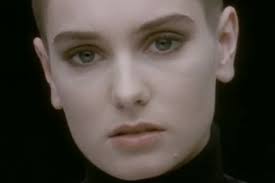
Close-up shot of Sinéad O'Connor
 
Close-up shot of the main male
performer of my music video

The music video for Nothing Compares 2U focuses heavily on the artist, strongly marketing her without treating her in a voyeuristic way. This helped to improve our music video as in our first few shooting sessions, we recorded far too many medium shots. This music video is an example of why close up shots of the artist(s) and/or any other important people are essential - unlike medium shots, close up shots help you to engage with and relate to the person in question. As the artist is usually the major selling point of the music video, close up shots of them are very important. The images shown above are examples of close-up shots being used like this in the music videos for Nothing Compares 2U and Tonight I Let You Go (my music video).

In addition to my other research on montage, the montage used in the music video for Nothing Compares 2U is highly effective and the cross fades that are used so well in that montage are also used for the montage in my edit (read The Edit, below).

Also, the shots of symbolic statues and constructions used in the music video for Nothing Compares 2U have had an effect on our music video. We use similar shots but add a modern twist, with our versions of these shots containing graffiti in urban areas and shots of traffic and traffic lights. These things are iconic symbols of contemporary Britain, just like the graveyard in the music video for Nothing Compares 2U shows many traditional statues and figures.

Cultural signifiers - such as statues - are used in the
music video for Nothing Compares 2U

The postbox, texting teenager, roads, cars, traffic lights, and housing
estate are all signifiers of contemporary Britain

The Edit
 
A cross-fade effect used in the montage in the
music video for Nothing Compares 2U

An example of the cross-fade effect that I utilized in
the urban montage near the end of my music video

As aforementioned, the montage in the music video for Nothing Compares 2U influences our music video. In my edit, there is a montage of shots that show the main character, the boy, walking through the city to the girl's house. The focus on subtle yet striking transitions - heavily relying on cross fades - in the music video for Nothing Compares 2U is reflected in my edit of our music video, as I also use many cross fades to make my edit of our music video more interesting and absorbing.

Furthermore, the music video for Nothing Compares 2U matches the action and the lyrics seamlessly to emphasize both and make you feel the emotions that Sinéad O'Connor's character is feeling. I have tried to do this myself, with lyrics such as " I keep on running" being matched with action that contains the main character running (whether it is physically or mentally). In my edit of our music video, I have also matched the sequence containing lyric cards to the part of the track that is (at least partly) written on the lyric cards. This is obvious, but needs to be done well to maximise the effectiveness of the lyric cards.

Sunday, 9 December 2012

Music Video Ratings

This post lists the music videos I have analysed and my personal rating of each of them. I will rate them out of ten on four main points:

Content - this concerns the narrative and/or structure of the music video
Visuals - the way in which the visuals are used to create different effects
Sound - how sound is implemented for various results - this can be matching the action to the lyrics, using other sounds, and more
Longevity - this is how well the music video stand the test of time. Is it long or absorbing enough to begin with, and will you want to watch it several times or come back to it in the future?

This will result in an overall score out of 40.

You will see that most of the music videos I have analysed are (at least partly) from the pop genre. This is due to the fact that pop is the primary genre of the track we have used for our music video, Tonight I Let You Go by The Colours.

List of Scores in order of Score (descending):

Nothing Compares 2U - 35.5/40
Afrika Shox - 32.5/40
What's a Girl to Do? - 29/40
Skyfall - 26/40
Paradise - 23.5/40

Separate Scores:

Afrika Shox:

Content - 9/10
Visuals - 9/10
Sound - 7/10
Longevity - 7.5/10

Total Score: 32.5/40


Skyfall:

Content - 5/10
Visuals - 7.5/10
Sound - 9.5/10
Longevity - 4/10

Total Score: 26/40


Paradise:

Content - 4.5/10
Visuals - 7/10
Sound - 6.5/10
Longevity - 5.5/10

Total Score: 23.5/40


What's a Girl to Do?:

Content - 7.5/10
Visuals - 7.5/10
Sound - 7/10
Longevity - 7/10

Total Score: 29/40


Nothing Compares 2U:

Content - 8.5/10
Visuals - 10/10
Sound - 9/10
Longevity - 8/10

Total Score: 35.5/40

Friday, 7 December 2012

Nothing Compares 2U - Music Video Analysis


Nothing Compare 2U by Sinéad O'Connor is a prime example of how to utilise one of the main attractions of a music video, the artist, without taking away from the track itself or treating the artist in a voyeuristic way (as described in Goodwin's Laws). Originally, the song was written and composed by the artist Prince, as one of his side projects - the band The Family. However, it did not become a worldwide hit until Sinéad O'Connor covered the song and released it as her second single in her second studio album, I Do Not Want What I Haven't Got -though this was not the version that made the song so popular. Sinéad O'Connor later recorded and produced the song alongside the artist Nellee Hooper, and this is the version that caused the success of the track. The music video created for this song (above) is now an iconic music video and was popular on channels such as MTV at the time.

The black costume and background manage to
remove voyeuristic treatment of the artist
and place the focus on her and what she is doing

The music video itself focuses massively on the artist herself - Sinéad O'Connor. This is done by using close up shots of Sinéad O'Connor that cause you to relate to the artist and emphasize with her emotions - and this is important in this music video, as you see her emotions progress drastically through the music video. Normally, when a female artist is focused upon it is in a voyeuristic way that exploits narcissism (the notion of looking). However, in this music video, this does not occur. The completely back background that appears whenever there shot of Sinéad O'Connor singing (which is most of the time) removes any part of the mise-en-scene which would be voyeuristic. Her costume is also completely black and means that the only visible part of her body is her head. This black costume blends into the black background and you are left with what can look like a floating head! The costume is normally the main source of voyeurism, and the way it is implemented here causes you to be completely focused on her face, her expressions, her emotion and her singing.

These factors progress as you watch the music video. At the beginning, she is composed and cold-looking, but as you watch the music video she becomes more emotional, to the point where you can visibly see tears rolling down her face at the end. These emotions emphasize the lyrics as well - this song describes the loss of a lover that she cannot bear to be without, as nothing compares to him. An example of this is when she sings about her doctor telling her to get out and have fun, she sings with anger in her voice and on her face.

You visibly see the emotions of
the artist progress through
the music video
At certain points of the song, the music video moves away from this type of shots and uses fading effects to create striking images of old statues and constructions. You occasionally see the artist herself walking through these angelic statues while looking like a black angel herself in her long, dark robe. The black costume makes her stand out and signifies her loss of a loved one - walking through a graveyard by herself emphasizes the feeling of isolation. These images are memorable and well-timed - they ensure that you do not get bored of the long close up shots of Sinéad O'Connor.
Cross fades are used well to
create an effective montage
Furthermore, these shots are used more at one point of the video than any other - around the middle point of the song, a montage is created using close up shots of Sinéad O'Connor's face and shots of the graveyard. This montage is vital in adding some variety to the music video and is subtle enough to fit into the music video without ruining the slow, reflective tone. This is done by using the symbolic statues and some different angle close up shots of the artist. The primary video transition used is a cross fade, and this creates a dynamic transition while keeping to aforementioned tone of the song - if a large, invasive transition was used it would ruin the pacing of the music video completely.

In addition, the genre of this song is alternative pop - it is slower and more meaningful, perhaps, than most pop songs. The more respectful nature of the song also sets it apart from the mainstream nature of traditional pop. The track still retains some aspects of the genre, though, such as a focus on the artist. In the pop genre, the artist is one of the main aspects of the track, the music video and how it is marketed.

Saturday, 24 November 2012

Montage

Montages are used in many different kinds of films - music videos, movies, and television programmes are just a few examples. They are used to express thoughts and ideas in a visual way, and often result in powerful and emotional sequences. Montages such as the one used in the opening of "This is England" are very striking. This particular montage does a brilliant job of creating a unique take on England and the famous moments - positive and negative - that are often associated with it.


The montage theory arose from Lev Kuleshov's work, which contained the a+b=c definition of montage. Lev Kuleshov found that having one image follow another image can produce a thought. His experiments supply us with some examples of this - he found that a picture of a silent, open mouth followed by a picture of a bird flying through the sky would make people think of the mouth singing. Also, when this image of a mouth was followed by a picture of food, people pictured a hungry mouth. The consumer sees the two pictures and combines them to create a result. These experiments were the basis for the development of the montage. A montage triangle can reflect the Kuleshov effect, as it is now usually called. Using the examples that I aforementioned, a montage triangle can be constructed with the image of the mouth at the top, and the images of the food and flying bird below it. This montage triangle results in two equations:

A montage triangle, which
shows the Kuleshov effect
Mouth+Bird=Singing

Mouth+Food=Hungry

A significant part of the art of montage is editing - the timing of the editing is particularly important. Rhythmic and metric editing are used for many reasons, such as to create as much tension as possible in a dramatic scene. Timing the beat of a soundtrack to the action can emphasize the emotions that are felt by the viewer. This would make the film become more interesting and absorbing. 

In addition, I think that seeing a montage where the beat of the soundtrack and the action are timed well is something people enjoy seeing. This makes the consumer want to watch the film more.

Sergei Eisenstein made The Battleship Potemkin (below), which contains an infamous montage. Eisenstein established five types of montage, which are:


Intellectual: Where the shots are put together in a way that creates an intellectual meaning based on the way they combine together.

Rhythmic: This contains cutting the shots together based on continuity, which creates visual continuity between each edit.

Metric: Where images are shown in a way that follows the beat and rhythm of the soundtrack. The focus is on the timing of the editing and what it conveys, rather than the connotations of the shots themselves.

Tonal: The focus is on the meaning of each shot - not how it is edited together. The timing of the editing and the continuity of the shots is less important.

Overtonal: A combination of rhythmic, metric, and tonal montage. The combination of these three different methods is used to construct more complicated and intricate forms of montage.

He said: "The idea of film-making as construction and montage as the putting together of parts of a machine (a machine for signifying, rather as Le Corbusier conceived of houses as machines for living in) had a strong appeal in modernist circles in the early years of the Russian Revolution."

Eisenstein is saying that montage is similar to combining many different parts of a machine to create a whole that conveys a certain meaning or emotion. Montages control what the viewer's response will be; they are used to make the viewer feel a certain emotion or picture something. 

In our music video, we may use montages at some points to create different effects - we may even combine a montage with other effects, such as lyric cards. A music video is, itself, a form of montage - a major part of music videos is conveying meaning through images and artistic editing.

Monday, 12 November 2012

The Mood Board for Our Music Video

One of the first things we did in the process of planning our music video was to construct a mood board that would supply us with inspiration for the following subjects:

General Information about The Colours
The Band
The Costume
The Similar Bands
The Genre
The Lyrics

This mood board was a vital part of our planning process - if we ever needed inspiration, we could look at it and we would come up with great ideas quickly.

The Mood Board


The Making of the Mood Board


Sunday, 11 November 2012

Shooting Session #6

Our sixth shooting session was very short - it consists of a handful of shots of the main character (the boy) going through lyric cards in a similar fashion to the music video for Subterranean Homesick Blues by Bob Dylan. We have used a cultural signifier to strengthen the intertextual link - the industrial area in the music video for Subterranean Homesick Blues is a cultural signifier of the industrial area in which the music video was made. In our music video, the cultural signifier is a red postbox - a classic, iconic item that is strongly associated with contemporary Britain. 

The main problem we found in our shoot was that the lyric cards were simply too small - we need to re-shoot some of these shoots with A3 lyric cards rather than A4 so that you can see the text on the lyric cards in longer shots. This would enable us to create a more faithful reproduction of Bob Dylan's music video for Subterranean Homesick Blues. However, cutting the long shots together with the close-up shots we filmed would also create a satisfying use of lyric cards in our music video.