Friday, 8 March 2013

Tuesday, 5 March 2013
Final Music Video
This is the final version of my music video for Tonight I Let You Go by The Colours:
Monday, 4 March 2013
The Beat Generation
My analysis of music videos has led me into the idea of lyric or cue cards from looking at the music video for Subterranean Homesick Blues by Bob Dylan. This subsequently caused me to learn about the Beat Generation, which has a strong connection to Bob Dylan and the music video for Subterranean Homesick Blues.
The Beat Generation came into the spotlight post-World War II because of some American writers who met in New York in the 1950s. The central themes of the Beat culture were the rejection of received standards, style innovations, drug experimentation, alternative sexualities, an interest in Eastern religion, a rejection of materialism, and explicit portrayals of the human condition.
The best known pieces of literature to come out of the Beat Generation are Howl by Allen Ginsberg (1956), Naked Lunch by William S. Burroughs (1959), and On the Road by Jack Kerouac (1957). Howl and Naked Lunch ended up as the focus of the obscenity trials that helped liberalise publishing in the United States.
The video below shows Ginsberg reading Howl, his infamous piece of Beat Generation literature:
The authors of these pieces of literature were part of the central group that caused the Beat Generation. These people developed a reputation as bohemian hedonists who celebrate non-conformity and spontaneous creativity.
The Source is a documentary on the Beat Generation shown in 1999. This documentary looked closely at the Beat Generation from beginning to end, and, despite members of the Beat Generation being deceased, analyses the era in great detail. The first part of the documentary (the length of the documentary means that it had to be split into 7 separate YouTube videos) is shown below. To see the next six parts, proceed to the YouTube channel that uploaded it or click on the correct related videos.
The Beat Generation had a large effect on rock and roll and popular music outside of the music video for Subterranean Homesick Blues. For example, the Beatles were influenced by the Beat Generation; the "a" in "Beatles" was partially inspired by the Beat Generation. Also, John Lennon was a fan of Jack Kerouac, who was one of the main Beat Generation writers. Another one of these central figures to the Beat Generation, Allen Ginsberg, later met and became friends with the Beatles. One member of the Beatles, Paul McCartney, has another link to Allen Ginsberg, as he played the guitar for Ginsberg's album Ballad of the Skeletons.
Ginsberg had several friends in rock and pop music. One of these was, as I have mentioned in previous posts, Bob Dylan. Other than Subterranean Homesick Blues, another link between the two is that Ginsberg toured with Dylan on the Rolling Thunder Revue in 1975. Ginsberg and Dylan were also both Jewish. Going back to the music video for Subterranean Homesick Blues, as Ginsberg is dressed as a Rabbi when he makes an appearance in the music video, this could be seen as Bob Dylan awarding Allen Ginsberg status. This is because Rabbi are seen as symbols of power, authority and status among Jews.
Ginsberg was also friends with Ken Kesey's Merry Pranksters (this group promoted the use of psychedelic drugs and their motto was "Never Trust a Prankster", which has an obvious link to the group's name). Neal Cassady was part of this group, along with other members which included members of the American rock band Grateful Dead.
Another central figure in the Beat Generation, William S. Burroughs, was friends with Mick Jagger, Lou Reed and Patti Smith. Also, Burroughs' novel The Soft Machine was the inspiration for the name of the British progressive rock band Soft Machine. The musical group Steely Dan is another group that named itself after something from Burroughs' work - in this case, the steam-powered dildo in Burroughs' infamous Naked Lunch. Yet another piece of work that was motivated by Burroughs' work is the track Naked Lunch by the Japanese free jazz band Tipographica. This track was made to celebrate Burroughs' piece of literary work that has the same name. The singer-songwriter Tom Waits also collaborated with Burroughs' on the theatrical work The Black Rider.
Before Tom Waits collaborated with Burroughs, though, he had links to the Beat Generation. Tom Waits was a Beat [Generation] fan (fans of the Beat Generation were known as Beatniks), and wrote the song Jack and Neal about Jack Kerouac and Neal Cassady (aforementioned major parts of the Beat Generation). Tom Waits also recorded the track On the Road with Primus. This was written by Jack Kerouac after finishing the novel.
Furthermore, a song named Kerouac was created to make a tribute to Jack Kerouac as well as his personal philosophy and way of life. This song was written by low rock musician Mark Sandman. Sandman was the former member of the alternative jazz rock band Morphine, where he was the bass guitarist and lead vocalist. He was widely open to the Beat Generation, which led to his creation of the song Kerouac.
The Beat Generation came into the spotlight post-World War II because of some American writers who met in New York in the 1950s. The central themes of the Beat culture were the rejection of received standards, style innovations, drug experimentation, alternative sexualities, an interest in Eastern religion, a rejection of materialism, and explicit portrayals of the human condition.
The best known pieces of literature to come out of the Beat Generation are Howl by Allen Ginsberg (1956), Naked Lunch by William S. Burroughs (1959), and On the Road by Jack Kerouac (1957). Howl and Naked Lunch ended up as the focus of the obscenity trials that helped liberalise publishing in the United States.
The video below shows Ginsberg reading Howl, his infamous piece of Beat Generation literature:
The authors of these pieces of literature were part of the central group that caused the Beat Generation. These people developed a reputation as bohemian hedonists who celebrate non-conformity and spontaneous creativity.
The Source
The Source is a documentary on the Beat Generation shown in 1999. This documentary looked closely at the Beat Generation from beginning to end, and, despite members of the Beat Generation being deceased, analyses the era in great detail. The first part of the documentary (the length of the documentary means that it had to be split into 7 separate YouTube videos) is shown below. To see the next six parts, proceed to the YouTube channel that uploaded it or click on the correct related videos.
The Beat Generation's Effect on Rock and Pop Music
The Beat Generation had a large effect on rock and roll and popular music outside of the music video for Subterranean Homesick Blues. For example, the Beatles were influenced by the Beat Generation; the "a" in "Beatles" was partially inspired by the Beat Generation. Also, John Lennon was a fan of Jack Kerouac, who was one of the main Beat Generation writers. Another one of these central figures to the Beat Generation, Allen Ginsberg, later met and became friends with the Beatles. One member of the Beatles, Paul McCartney, has another link to Allen Ginsberg, as he played the guitar for Ginsberg's album Ballad of the Skeletons.
Video of Ballad of the Skeletons, with William S. Burroughs reading, music by Philip Glass and Paul McCartney playing the guitar
The performance of A Ballad of American Skeletons - read by Allen Ginsberg and with Paul McCartney playing the guitar - at The Royal Albert Hall in 1993. The evening of poetry and performance was promoted by Goldmark and entitled The Return of the Reforgotten.
Ginsberg had several friends in rock and pop music. One of these was, as I have mentioned in previous posts, Bob Dylan. Other than Subterranean Homesick Blues, another link between the two is that Ginsberg toured with Dylan on the Rolling Thunder Revue in 1975. Ginsberg and Dylan were also both Jewish. Going back to the music video for Subterranean Homesick Blues, as Ginsberg is dressed as a Rabbi when he makes an appearance in the music video, this could be seen as Bob Dylan awarding Allen Ginsberg status. This is because Rabbi are seen as symbols of power, authority and status among Jews.
Ginsberg was also friends with Ken Kesey's Merry Pranksters (this group promoted the use of psychedelic drugs and their motto was "Never Trust a Prankster", which has an obvious link to the group's name). Neal Cassady was part of this group, along with other members which included members of the American rock band Grateful Dead.
Another central figure in the Beat Generation, William S. Burroughs, was friends with Mick Jagger, Lou Reed and Patti Smith. Also, Burroughs' novel The Soft Machine was the inspiration for the name of the British progressive rock band Soft Machine. The musical group Steely Dan is another group that named itself after something from Burroughs' work - in this case, the steam-powered dildo in Burroughs' infamous Naked Lunch. Yet another piece of work that was motivated by Burroughs' work is the track Naked Lunch by the Japanese free jazz band Tipographica. This track was made to celebrate Burroughs' piece of literary work that has the same name. The singer-songwriter Tom Waits also collaborated with Burroughs' on the theatrical work The Black Rider.
 |
| The late William S. Burroughs |
Before Tom Waits collaborated with Burroughs, though, he had links to the Beat Generation. Tom Waits was a Beat [Generation] fan (fans of the Beat Generation were known as Beatniks), and wrote the song Jack and Neal about Jack Kerouac and Neal Cassady (aforementioned major parts of the Beat Generation). Tom Waits also recorded the track On the Road with Primus. This was written by Jack Kerouac after finishing the novel.
Furthermore, a song named Kerouac was created to make a tribute to Jack Kerouac as well as his personal philosophy and way of life. This song was written by low rock musician Mark Sandman. Sandman was the former member of the alternative jazz rock band Morphine, where he was the bass guitarist and lead vocalist. He was widely open to the Beat Generation, which led to his creation of the song Kerouac.
The Resurgence of Interest in the Beats
 |
| Laurie Anderson's album Mister Heartbreak features Burroughs |
In the 1980s, there was a resurgence in interest in the Beats among bands. Allen Ginsberg worked with Clash, and Burroughs worked with Sonic Youth, R.E.M., Kurt Cobain, and Ministry (to name a few). Laurie Anderson featured Burroughs on her 1984 album Mister Heartbreak - Burroughs read the lyrics of the closing track, Sharkey's Night - and in her 1986 concert film Home of the Brave. As well as this, King Crimson produced the album Beat. This album was inspired by the Beat Generation.
Burroughs was named by Bono from the group U2 as a major influence, and Burroughs also made an appearance in U2's music video Last Night on Earth in 1997. This was Burroughs' last filmed performance, as he died mere weeks after.
Saturday, 2 March 2013
Final Print Productions
Below I have shown the final versions of my Digipak and Magazine Advert. These two products make up my Print Productions.


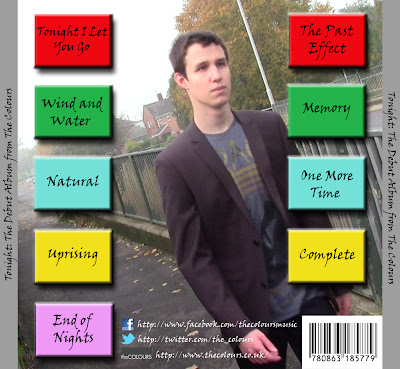

Digipak:
Panel 1:

Panel 2:

Panel 3:

Panel 4:
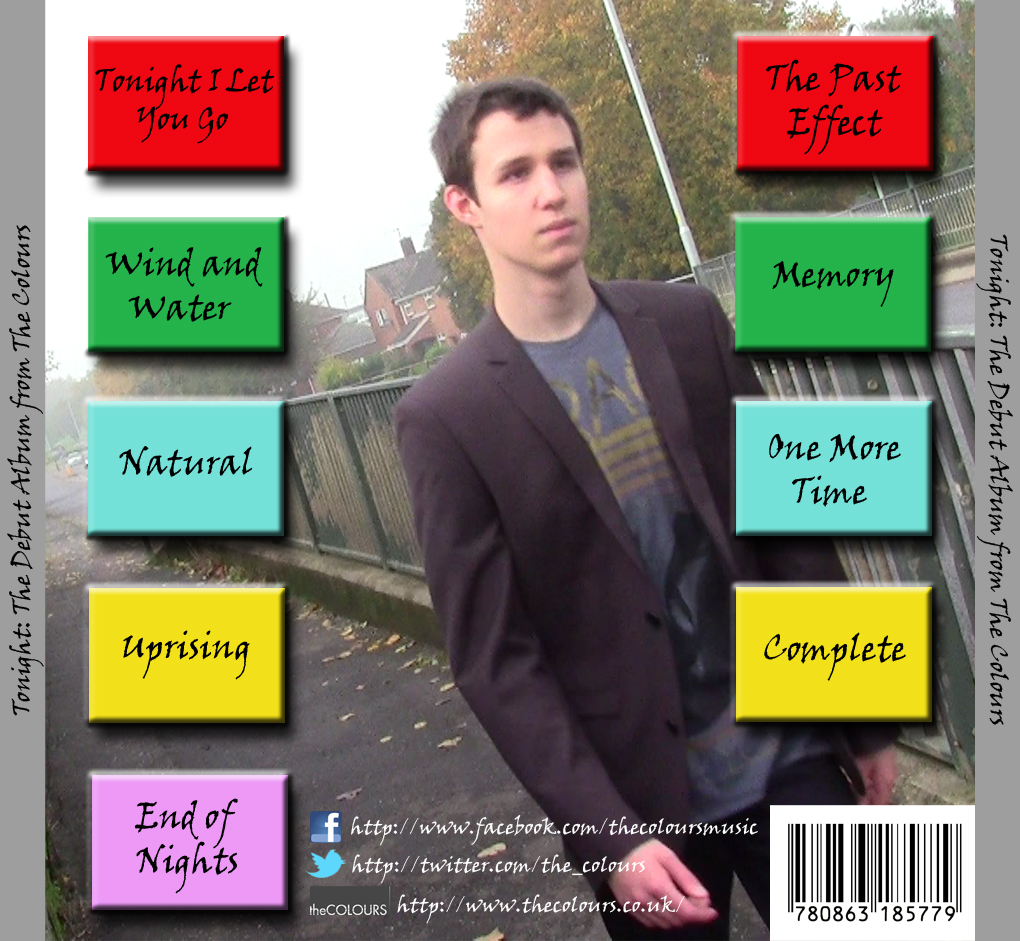
Magazine Cover:

Friday, 1 March 2013
Updated Print Productions and the Reasoning Behind My Changes
After collecting feedback from my tutor and my class, I realised that I needed more colour in my print productions. Firstly, the name of the artist - The Colours - would be given an increased focus by using more colour. I have used this effect before - for example, in the lyric card of my music video, where the lyric cards are made out of various colours of card instead of the traditional white card used in the music video for Bob Dylan's Subterranean Homesick Blues.
Possibly the biggest advantage of using colour, though, is the way in which it would make my print productions fit into the pop genre. Bright colours are common in the pop genre, as they appeal to most of the target audience - teenagers, mostly female. I have decided to use bright pink in my print productions, as this is the colour I have observed to be the most common when researching.
Maroon 5, a boy band from the pop genre that I have likened to The Colours, are a good example of this use of colour. When analysing their print productions in my research, I noticed how bright colours - primarily pink - were frequently used. If you look at the front panel of the digipak for their album Overexposed (shown below), you can see how often pink is used.

 The colour pink is also used on the front panel of Coldplay's (Coldplay is another similar artist to The Colours) well-known album Mylo Xyloto. Once again, I noticed this due to my study of their print productions in my research. It is used less heavily but you can still see how it is a commonly used colour in the Print Productions of the pop genre. I have shown the front panel of this digipak on the left and right (there was reversible artwork).
 Furthermore, other major parts of the pop music industry use bright colours - especially pink - in their graphic designs. HMV is a significant example of this. The logo for HMV is completely pink, helping it to appeal to its target audience, stand out, and conform to the conventions of the genre (pop) it is trying to fit into. HMV's focus on pop music - e.g. a point of sale display of One Direction (a popular boy band from the pop genre) merchandise is in one of my local stores - means that they need to advertise themselves to fans of the pop genre as much as possible.




Possibly the biggest advantage of using colour, though, is the way in which it would make my print productions fit into the pop genre. Bright colours are common in the pop genre, as they appeal to most of the target audience - teenagers, mostly female. I have decided to use bright pink in my print productions, as this is the colour I have observed to be the most common when researching.
Maroon 5, a boy band from the pop genre that I have likened to The Colours, are a good example of this use of colour. When analysing their print productions in my research, I noticed how bright colours - primarily pink - were frequently used. If you look at the front panel of the digipak for their album Overexposed (shown below), you can see how often pink is used.
 |
| The front panel of the digipak for Overexposed, the fourth album by Maroon 5. Notice the strong use of bright pink |

 The colour pink is also used on the front panel of Coldplay's (Coldplay is another similar artist to The Colours) well-known album Mylo Xyloto. Once again, I noticed this due to my study of their print productions in my research. It is used less heavily but you can still see how it is a commonly used colour in the Print Productions of the pop genre. I have shown the front panel of this digipak on the left and right (there was reversible artwork).
 Furthermore, other major parts of the pop music industry use bright colours - especially pink - in their graphic designs. HMV is a significant example of this. The logo for HMV is completely pink, helping it to appeal to its target audience, stand out, and conform to the conventions of the genre (pop) it is trying to fit into. HMV's focus on pop music - e.g. a point of sale display of One Direction (a popular boy band from the pop genre) merchandise is in one of my local stores - means that they need to advertise themselves to fans of the pop genre as much as possible.
All of this influenced my decision to include some colour into the two black and white parts of my print productions: the front panel of my digipak, and my magazine advert. I wanted to keep the unique black and white aspect of my print productions - which is linked to The Script - that stood out and challenged the generic conventions of the pop genre. Because of this, I decided to just make some of the titles bright pink. I made both of the logos for the artist - The Colours - bright pink, as well as the text on my magazine advert that read:
"The Debut Album"
"Available April 2013"
After this, I felt that the font of these pieces of text needed to be changed along with the colour. I changed the font of these pieces of text to a font that fitted into the generic conventions of the pop genre in a similar way to the new colour of the text. The new font resembles the font used for the logos of many pop artists, such as Coldplay and Lady Gaga. This link furthers strengthens the connection between my print productions - and therefore my whole brand - and the pop genre.


After changing the colour and font of certain pieces of font in my print productions, I made some other adjustments. I had too few tracks listed on the back panel (panel four) of my digipak, so I added some more tracks. I also changed the sizes of the new pieces of font so that their size was optimal for the effect I was trying to make.
The new designs for my Print Productions are below:
Digipak:
Panel 1:

Panel 2:

Panel 3:

Panel 4:

Magazine Advert:

Wednesday, 27 February 2013
Similarities Between a Similar Artist's Digipaks and My Print Productions
One of the digipaks from similar artists which I examined when researching and planning my print productions was #3 by The Script. I am going to examine the similarities between my print productions is their current state and this digipak from a similar artist (a boy band, with songs that fit into the pop genre).
Both my digipak and the digipak for #3 by The Script use black and white images to make the digipak stand out from the standard pop genre digipak, while still conforming to pop genre conventions that enable it to be identified as pop music. The focus on the band and their image is perhaps the most significant pop genre convention used, as the artist and their image is a massive part of how popular, loved, and successful an artist becomes.
 |
| The front panel of my digipak |
 |
| The front panel of the digipak for #3 by The Script |
Every part of my print productions uses the main performer - the boy - as the main focus as he is the human symbol associated with the brand. Similarly, the digipak uses the artist as the main focus by blending the three members of the boy band, The Script, into a human shape that is the sole focus - excluding the logos or the artist and album name - of the front panel of the digipak.
The artistic look of both digipaks is also a way in which they are related. The paintbrush-like effect I have used on the image, and its integration with the graffiti in the background, emphasises the unique nature of it. The front panel of the digipak for #3 by The Script uses the way it integrates the images of the three band members together as its way of attracting its target audience - teenagers, mainly female, who will likely enjoy some forms of art - using creativity. The coat of the band member on the far right (Mark Sheehan) is faded into that of the largest - and most famous - band member (Danny O'Donoghue) to create an interesting effect that resembles scales on O'Donoghue's neck.
So, both of these digipaks use creative techniques, such as black and white and other artistic effects, such as the way text and image integrate together, to make them stand out from the competition in their genre while still conforming to genre conventions, such as the focus on the artist, to make them immediately identifiable with the pop genre.


How the Music Video for Hall of Fame Featuring will.i.am Relates
to the Respective Digipak
The image shown below is the front panel of the digipak for the single Hall of Fame featuring will.i.am. This song is part of the album #3, mentioned above.

Once again, you can see the stylish, creative design. The aspect I would like to focus on is how this digipak is connected to the respective music video, shown underneath the image of the front panel of the digipak.
Both of these products focus heavily on the artist, with the artist being the primary focus of the front panel of the digipak and there being many performance shots of the band members (including will.i.am). This shows both of the products conforming to the pop genre conventions I mentioned previously in this post. The pop genre conventions shared by all of these products link them together and allow them to work more effectively as a whole.

Both products also emphasise the message of being dedicated to your aspirations in life - the confetti-like effect on the front panel of the digipak is a strong link to the confetti shown for the ballerina who has achieved her dream at the end of the music video. The band members (including will.i.am) are always shown in a strong, positive way too. For example, when they sing in the performance shots, they are regularly shown in close-up shots, and the focus of the front panel of the digipak is Danny O'Donoghue's face. The fact that O'Donoghue is the most famous member of The Script, partly due to his role as a judge on the TV show the Voice UK, is not a coincidence - by focusing on the most recognisable member of the band, they emphasise the generic pop convention of focusing on the artist, who is often the biggest part of marketing the product(s). Once again, using the same techniques in more than one product concerning the track itself - in this case, the music video and the digipak - emphasises these techniques and makes them work more effectively. This is a technique used for my own range of products concerning my chosen track, Tonight I Let You Go by The Colours.
Monday, 25 February 2013
Provisionally Finished Print Productions
Below I have shown the provisional final designs for my print productions: the digipak and the magazine advert.


Digipak:
Panel 1:

Panel 2:

Panel 3:

Panel 4:

Magazine Advert:
Subscribe to:
Posts (Atom)